
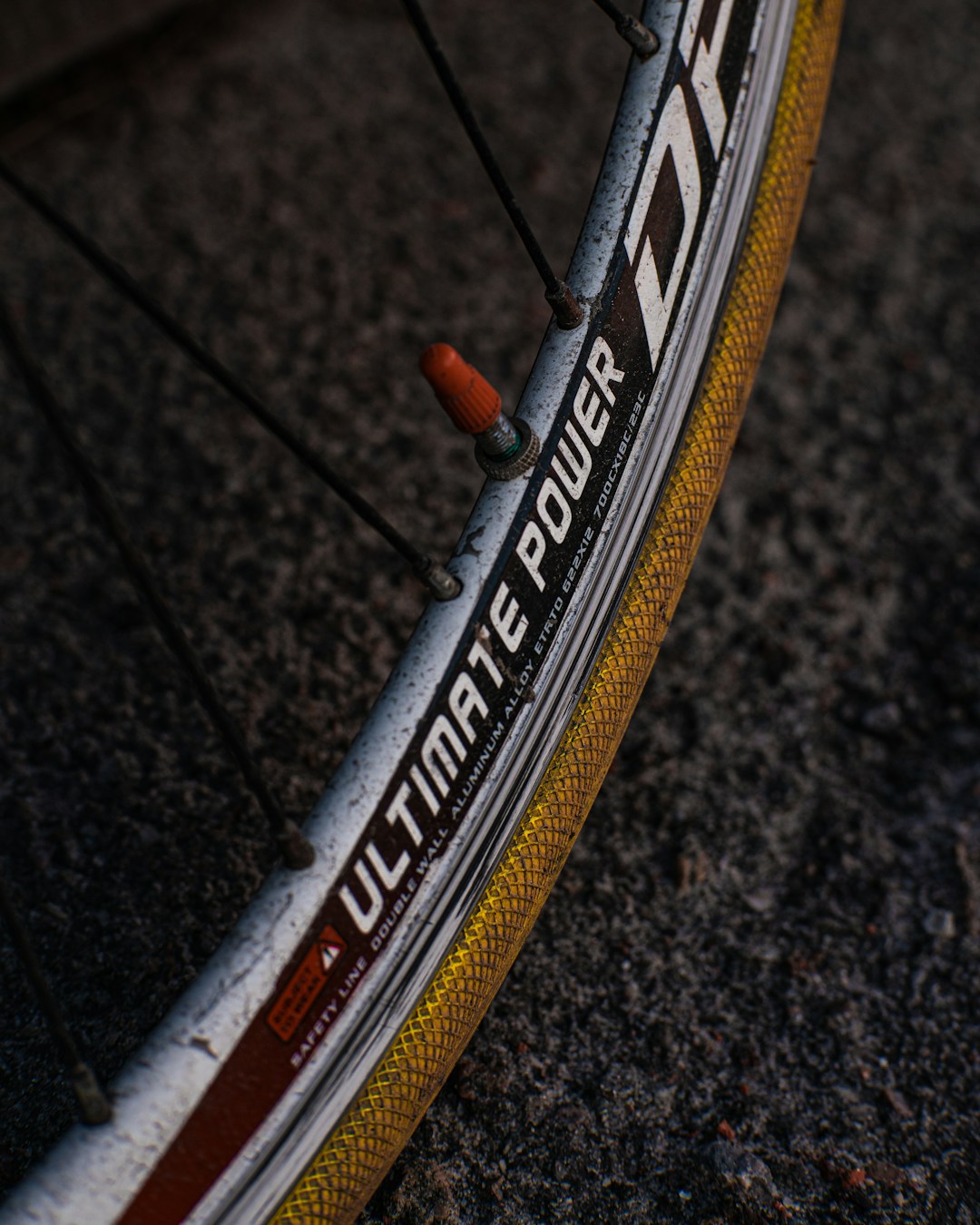
Most people buy a bicycle pump when they suddenly need one. That is often the moment you discover the difference between a pump that works perfectly for a narrow city-bike tyre and one that is better suited to moving a large volume of air into a wide fatbike tyre.
The right pump depends mainly on tyre volume, valve type and where you use the pump. At home, a stable floor pump is usually more pleasant to use. On the road, you mainly want a compact pump that genuinely fits your valve.
Floor pump or mini pump?
| Type | Best use | What to look for |
|---|---|---|
| Floor pump | At home, checking tyre pressure regularly | Good pressure gauge, stable base, suitable pump head |
| Mini pump | On the road, emergency use | Length, weight, frame mount and valve type |
| High-volume pump | Wide MTB or fatbike tyres | More air per stroke rather than only very high maximum pressure |
Check your valve first
The most common bicycle valves are Presta, Schrader and Dunlop. Many modern pumps support more than one type, but check before buying. With a mini pump in particular, you do not want to discover on the roadside that you need an adapter that is sitting at home.
Three pumps worth comparing
Topeak JoeBlow Sport III
The JoeBlow Sport III is a floor pump with a steel barrel and base, a 3-inch analogue pressure gauge and a TwinHead DX pump head for Presta, Schrader and Dunlop valves. Topeak lists a maximum pressure of 160 psi / 11 bar and a 72 cm hose.
Worth considering if: you want one home pump for several bicycles and appreciate a large, easy-to-read gauge.
View the JoeBlow Sport III at Topeak →
Topeak Mountain DA G
This compact pump is specifically aimed at higher air volume. Topeak uses a Dual-Action system that moves air on both the push and pull stroke. It has a built-in analogue gauge, supports Presta, Schrader and Dunlop, and is rated up to 60 psi / 4 bar.
Worth considering if: you want an on-the-road pump for wider tyres and would rather build air volume quickly than reach extremely high pressure.
Lezyne Alloy Drive
Lezyne positions the Alloy Drive as a high-volume hand pump. It uses a flexible hose for Presta and Schrader valves, has a maximum pressure of 90 psi and includes a frame mount. The manufacturer lists the medium version at around 131 grams.
Worth considering if: you want a compact metal hand pump for wider tyres and do not need a built-in pressure gauge.
Fatbike: pay attention to air volume
A wide fatbike tyre contains much more air than a narrow city-bike tyre. A tiny pump with a narrow barrel may technically fit, but it can take a huge number of strokes. A high-volume pump is therefore often the more sensible choice.
The correct tyre pressure depends on the tyre, rim, load and manufacturer recommendations. Do not blindly copy one universal number from the internet. Use the markings on the tyre and the bicycle or tyre manufacturer's instructions as your starting point.
Pressure gauge: luxury or genuinely useful?
For home use, we find a pressure gauge useful. It lets you track changes and set both tyres consistently. On a compact emergency pump, a gauge matters less if size and reliability are more important to you.
What would we keep at home and carry on the road?
At home: a stable floor pump with a gauge and a head that supports several valve types. On the road: a mini pump that definitely fits your valve and can be carried on the bike. If you ride a fatbike, choose a pump that is explicitly designed for high-volume inflation.
Unsure what valve or tyre you have? Visit FietsGenot in Lelystad or send us a clear photo of the valve and the sidewall of the tyre.
Sources
- Actuele productspecificaties van Topeak en Lezyne via de hierboven gelinkte fabrikantpagina’s.
This article currently contains no affiliate links and is not a hands-on test of the pumps mentioned.
Atmosphere photo: streetsh / Unsplash.