
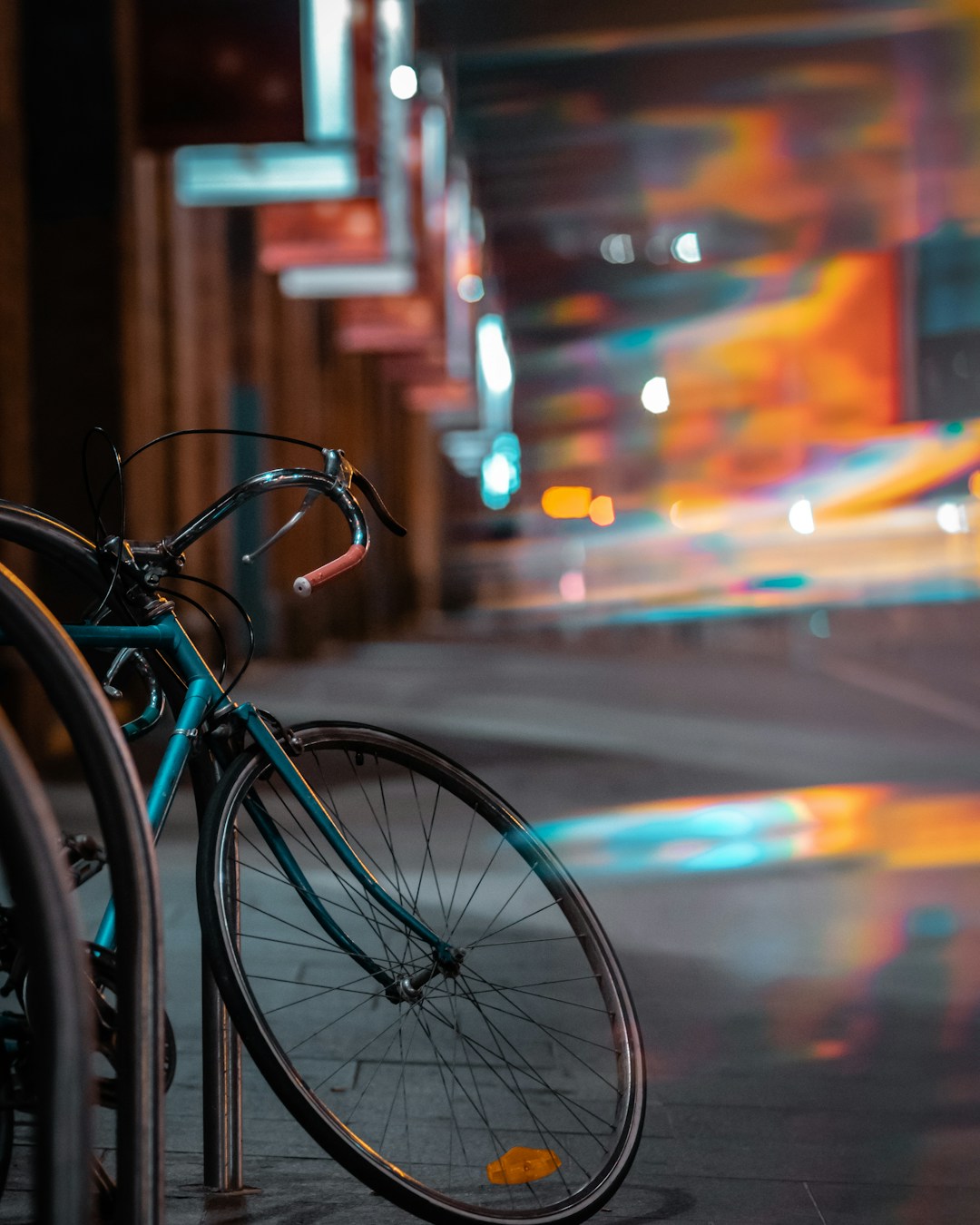
With bicycle lighting, two questions are often mixed together: can other road users see me? and can I see the road properly myself? A short city ride under street lights calls for something different from riding on a dark cycle path outside the built-up area.
A useful light should therefore not be chosen purely by the highest number on the box. Look at the beam pattern, mounting, battery life and where you ride. Also note that Dutch rules are clear about colour and flashing modes.
What is legally required in the Netherlands?
In darkness, at dusk and in poor visibility, a bicycle must have a front and rear light. The front light must be white or yellow, and the rear light red. Fixed lighting must be aimed at the road so that it does not dazzle other road users. In the Netherlands, both fixed and removable bicycle lights must not flash.
Dat laatste is belangrijk bij moderne USB-lampen: veel modellen hebben een flashing mode. Zo’n stand kan technisch op de lamp zitten, maar gebruik hem op de openbare weg in Nederland niet als vervanging voor de toegestane constante verlichting.
View the current rules on the Dutch government website →
Lux and lumens are not the same
Lumens roughly describe how much light a lamp emits. Lux describes how much light reaches a surface. That means you cannot simply say that a 100-lux light is “more” or “less” powerful than a 500-lumen light.
For road cycling, the beam pattern is especially important. A well-designed road beam puts light where you need it without unnecessarily shining upwards. A very bright circular beam may look impressive, but it is not automatically more useful or more considerate to oncoming traffic.
Which lighting suits your ride?
| Use | What to focus on | Practical priority |
|---|---|---|
| City riding with street lights | Visibility, controlled beam, simple mounting | Reliable switching and enough battery life |
| Dark cycle path | Wider, more useful forward illumination | A beam that lights the road without dazzling |
| Daily commuting | Battery life and quick charging | Predictable battery indication |
| Several bicycles | Quick-release mounting | Does the bracket fit all your handlebars/seatposts? |
Three lights worth comparing
SIGMA AURA 100 LINK
SIGMA rates the AURA 100 LINK at up to 100 lux, a beam distance of up to 110 metres and a runtime of up to 12 hours in Eco mode. The light uses USB-C, includes an automatic mode and has a road-oriented beam. SIGMA also lists the Dutch RAI bicycle-lighting approval for the AURA 100/BLAZE LINK set.
Worth considering if: you mainly ride on public roads and value a controlled road beam more than the highest possible lumen figure.
View the AURA 100 LINK at SIGMA →
Lezyne Lite Drive 1200+
Lezyne lists a maximum output of 1,200 lumens for the Lite Drive 1200+, USB-C 2A charging, a 3,800 mAh battery and IPX7 water resistance. The maximum stated runtime is 60 hours in the lowest-output mode.
Worth considering if: you want plenty of light reserve and regularly ride on dark routes. Aim a powerful lamp carefully so that you do not dazzle oncoming riders.
View the Lite Drive 1200+ at Lezyne →
Cateye AMPP500
The AMPP500 is a more compact USB-rechargeable front light with up to 500 lumens. Cateye lists a wide OptiCube lens, side visibility, low-battery indicator and a FlexTight handlebar bracket.
Worth considering if: you want a simple removable light for everyday use and do not need a heavy high-output system.
Do not overlook the bracket
A good light that slowly tilts downwards on cobblestones is still frustrating. Check the handlebar diameter, available space next to the display and cables, and whether the light can be secured properly without tools. On e-bikes and fatbikes, the handlebar is often already crowded.
Battery life: look at your real riding mode
Manufacturers specify runtime for each light setting. For daily commuting, the maximum theoretical runtime matters less than the runtime in the mode you actually use. If you need the strongest setting on every ride, use that figure when planning charging.
A clear battery indicator is often more useful than yet another lighting mode.
Our practical approach
For a city like Lelystad, we would prioritise a well-controlled road beam and reliable mounting over chasing the highest lumen number for regular evening use. If you often ride on dark rural routes, extra light reserve becomes more important.
With fixed e-bike lighting, first check whether the original light can be repaired or replaced. If you have a fault with fixed lighting, visit FietsGenot for bicycle and e-bike repairs in Lelystad.
Sources
- Dutch government: current rules for bicycle lighting and reflectors.
- Actuele fabrikantspecificaties van SIGMA, Lezyne en Cateye via de hierboven gelinkte pagina’s.
This article currently contains no affiliate links and is not a hands-on test of the lights mentioned.
Atmosphere photo: Maximalfocus / Unsplash.